
A chipped, uneven, or deeply discolored tooth can make someone think twice before smiling in a family photo or speaking in a group. Dental veneers offer one possible way to improve these concerns while creating a natural-looking smile.
For patients researching veneers in Madison, IN, it helps to understand what veneers can—and cannot—do. They are not automatically the right choice for every cosmetic concern. A dentist must first consider tooth health, gum health, bite alignment, enamel, and personal goals.
This guide explains the basics in straightforward terms so patients can approach a cosmetic consultation with informed questions and realistic expectations.
This article provides general information and is not a diagnosis or personalized treatment recommendation. A dentist should evaluate each patient’s teeth, gums, bite, and medical history before recommending veneers or another cosmetic treatment.
What Are Dental Veneers?
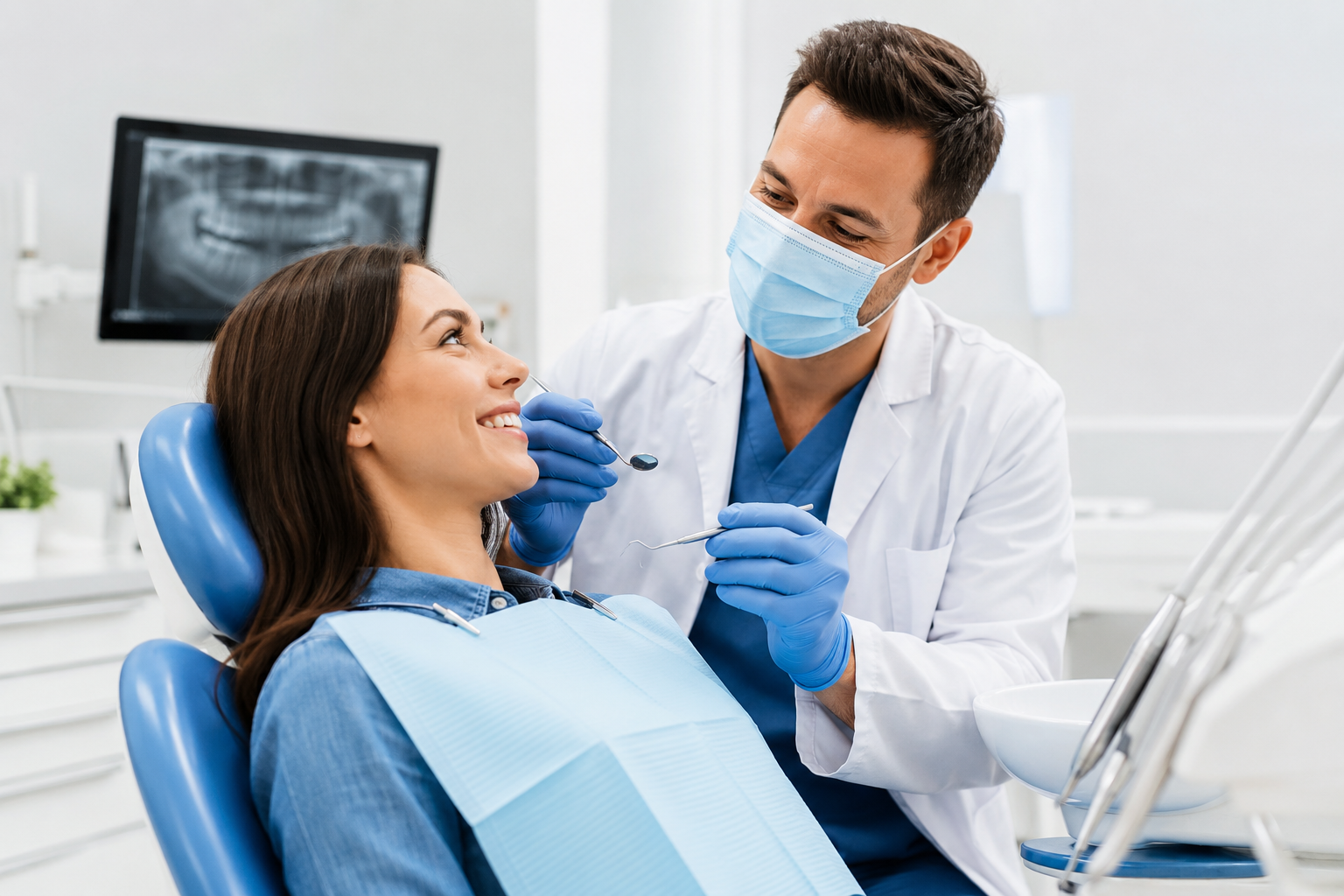
Veneers are thin restorations placed over the visible front surfaces of teeth. They are individually shaped and shaded to complement a patient’s smile. Rather than replacing an entire tooth, as a crown generally does, a veneer changes the appearance of the portion that shows when a person smiles.
Depending on the clinical situation, veneers may be made from dental ceramic, often referred to as porcelain, or created with tooth-colored composite resin. Ceramic veneers are typically fabricated to match the planned shape and shade. Composite veneers may be applied and sculpted directly on the tooth in selected cases.
Some veneers require the removal of a small amount of enamel, while minimally prepared or no-preparation designs may be possible for carefully selected patients. No-preparation treatment is not automatically more appropriate simply because it sounds less invasive. Tooth position, available space, enamel, bite forces, and the desired result all affect whether it is suitable. A clinical review of conventional and no-preparation veneers emphasizes the importance of careful case selection and precise planning.
What Cosmetic Concerns Can Veneers Address?
Veneers may be considered when a patient wants to improve one or more visible teeth. Depending on the examination and treatment plan, they can help address:
- Stains or discoloration that may not respond well to whitening
- Small chips or worn-looking edges
- Minor differences in tooth shape or size
- Small spaces between certain teeth
- Mild visual unevenness
- Older cosmetic work that no longer blends naturally with nearby teeth
Veneers are primarily cosmetic restorations. They do not cure gum disease, remove decay, or correct every bite problem. If a tooth has extensive damage, a dentist may discuss a crown or another restorative option. If tooth position is the main concern, orthodontic treatment may offer a more appropriate solution.
Who May Be a Good Candidate for Veneers?
A suitable candidate generally has healthy teeth and gums, enough appropriate tooth structure for bonding, and expectations that match what veneers can reasonably accomplish. The dentist also looks at how the upper and lower teeth meet. Heavy or uneven forces can place unnecessary stress on cosmetic restorations.
Issues such as active decay, inflamed gums, untreated dental infection, significant enamel loss, or frequent clenching and grinding may need attention before cosmetic treatment begins. In some cases, those factors may lead the dentist to recommend an alternative.
That is why a consultation is more than a shade-selection appointment. Madison Dental Health Partners explains that its initial evaluation may include a comprehensive oral examination, diagnostic imaging when needed, a periodontal assessment, and an oral cancer screening. These steps help the dental team assess overall oral health before developing a personalized plan.
How the Veneer Process Is Planned
1. Consultation and oral health evaluation
The process starts with a conversation. The patient can explain what feels bothersome about the smile and what kind of change is desired. Bringing examples can be useful, but another person’s smile cannot simply be copied. Tooth proportions, facial features, lip movement, gum contours, and bite differ from person to person.
The dentist then examines the teeth, gums, existing restorations, enamel, and bite. Any oral health concerns should be discussed before elective cosmetic work moves forward.
2. Smile design and treatment choices
The patient and dentist review details such as tooth shape, length, shade, and the number of teeth that may need treatment. The goal is usually balance rather than an unnaturally bright or perfectly identical appearance.
This is also the time to compare veneers with whitening, cosmetic bonding, orthodontics, crowns, or a combination of treatments. For example, professional whitening may be enough when color is the only concern. Bonding may be considered for a small chip, while orthodontic care may be more appropriate when alignment or bite is the primary issue.
3. Tooth preparation and veneer creation
If conventional ceramic veneers are selected, the dentist may remove a conservative amount of enamel to make space for the restorations. The precise amount varies by case. Impressions or digital records may then be used to plan the veneers.
Preparation-free and minimally prepared veneers can preserve more tooth structure in the right situation, but they have limitations. Without enough space, an added layer of material may make a tooth look bulky or create an unfavorable contour near the gumline. Published clinical literature therefore stresses appropriate selection rather than a one-size-fits-all approach.
4. Placement and bite evaluation
Before final placement, the dentist assesses the appearance and fit. The teeth are prepared for bonding, and the veneers are secured with dental materials designed for the restoration. The bite is then evaluated, and adjustments may be made where appropriate.
Patients should speak up about how the bite feels and ask questions about home care. Follow-up recommendations depend on the individual treatment and oral health findings.
Are Veneers Permanent?
Veneers are intended to be durable restorations, but no dental restoration can be promised to last forever. A veneer can eventually chip, fracture, loosen, stain at an exposed edge, or require replacement. The tooth underneath can also develop decay if plaque collects around restoration margins.
When enamel is removed, the treatment is generally considered irreversible because the prepared tooth will continue to need protection from a veneer or another restoration. This is an important point to discuss before consenting to care.
Patients can help protect veneers by brushing carefully with fluoride toothpaste, cleaning between the teeth, keeping routine dental appointments, and avoiding using teeth as tools. People who clench or grind should tell the dentist. Depending on the examination, a protective appliance or another strategy may be discussed.
Comfort, Sensitivity, and Recovery
Comfort varies with the type of veneer, the amount of preparation, the number of treated teeth, and individual sensitivity. The dental team can explain whether local anesthesia or other comfort measures are appropriate for the planned procedure.
Some people notice temporary temperature sensitivity or mild gum tenderness after preparation or placement. There is not one universal recovery timeline, so the dentist’s instructions should guide eating, brushing, and follow-up care. Persistent pain, swelling, a bite that feels noticeably uneven, or a loose or damaged veneer warrants a call to the dental office.
It is also helpful to distinguish early comfort from the long-term success of treatment. Feeling comfortable shortly after placement does not eliminate the need for good hygiene, routine examinations, and professional monitoring.
How Much Do Veneers Cost in Madison, IN?
The cost of veneers varies, so an accurate estimate requires an examination and a defined treatment plan. Factors may include the veneer material, number of teeth, complexity of the design, preliminary dental care, laboratory work, and whether other treatments are involved.
Because veneers are often elective cosmetic treatment, insurance coverage may be limited. Coverage differs by plan, however, so patients should review their benefits and request a written estimate. A useful estimate should clarify what is included and whether future maintenance or replacement would be a separate expense.
Cost should be considered alongside oral health, expected maintenance, and treatment alternatives. Choosing fewer veneers, whitening untreated teeth first, or using bonding in selected areas may sometimes create a balanced result, but only an examination can determine whether those options make clinical sense.
Questions to Ask at a Veneer Consultation
A well-planned consultation should leave the patient feeling informed rather than pressured. Helpful questions include:
- Are my teeth and gums healthy enough for veneers?
- Why are veneers recommended instead of whitening, bonding, or orthodontics?
- Will enamel need to be removed?
- What material is being recommended, and why?
- How will the planned shape and shade complement my smile?
- Could my bite or tooth-grinding habits affect the result?
- What maintenance will the veneers require?
- What happens if a veneer chips, loosens, or needs replacement?
- What fees are included in the treatment estimate?
Frequently Asked Questions About Veneers
Do veneers look natural?
They can be designed to resemble natural enamel in color, shape, and surface detail. The result depends on thoughtful planning, material selection, the condition of the underlying teeth, and the goals agreed upon by the patient and dentist. No specific cosmetic result can be guaranteed.
Can veneers fix crooked teeth?
Veneers may visually improve mild unevenness in selected situations, but they do not move tooth roots or correct a significant bite problem. If alignment is the main concern, the dentist may recommend an orthodontic evaluation.
Can veneers get cavities?
The veneer material itself does not develop decay, but the natural tooth around or beneath it can. Daily plaque removal and regular dental examinations remain essential.
Can veneers be whitened later?
Whitening products are intended to change the color of natural teeth, not the established shade of ceramic restorations. Patients considering both whitening and veneers should discuss treatment order so the final shades can be coordinated.
How many veneers does a patient need?
There is no standard number. Some patients want to address one chipped tooth, while others are considering several visible teeth. The dentist evaluates the smile as a whole and explains which approach may produce balanced proportions and color.
Are no-prep veneers right for everyone?
No. They may be appropriate when tooth position, enamel, available space, and cosmetic goals allow material to be added without creating excessive bulk. Conventional preparation may provide better contours in other cases, and some patients are not good candidates for veneers at all.
Explore Veneers With a Madison Dentist
Veneers can make a meaningful cosmetic difference for the right patient, but successful planning begins with healthy teeth, realistic expectations, and an honest discussion of alternatives. The best option is not always the most extensive one.
Madison Dental Health Partners provides cosmetic dentistry options, including veneers, for patients in Madison, IN. Anyone interested in changing the color, shape, spacing, or symmetry of visible teeth can request a consultation to learn whether veneers or a more conservative option may fit their needs. Patients are encouraged to bring questions, share their concerns, and take the next step only when they feel comfortable with the proposed plan.