
A brighter smile can help someone feel more comfortable in photographs, at work, or during everyday conversations. However, with whitening strips, toothpastes, LED kits, and professional treatments all competing for attention, choosing the right approach can feel confusing.
For patients considering teeth whitening in Madison, IN, the best place to start is by understanding why teeth become discolored and how different whitening methods work. A dental consultation can also identify concerns that should be addressed before treatment, such as cavities, gum irritation, or restorations that will not respond to whitening.
This article provides general educational information and is not a substitute for an examination or personalized advice from a dentist. Anyone with tooth pain, damaged teeth, significant sensitivity, or gum problems should consult a dental professional before using a whitening product.
Why Do Teeth Become Stained?
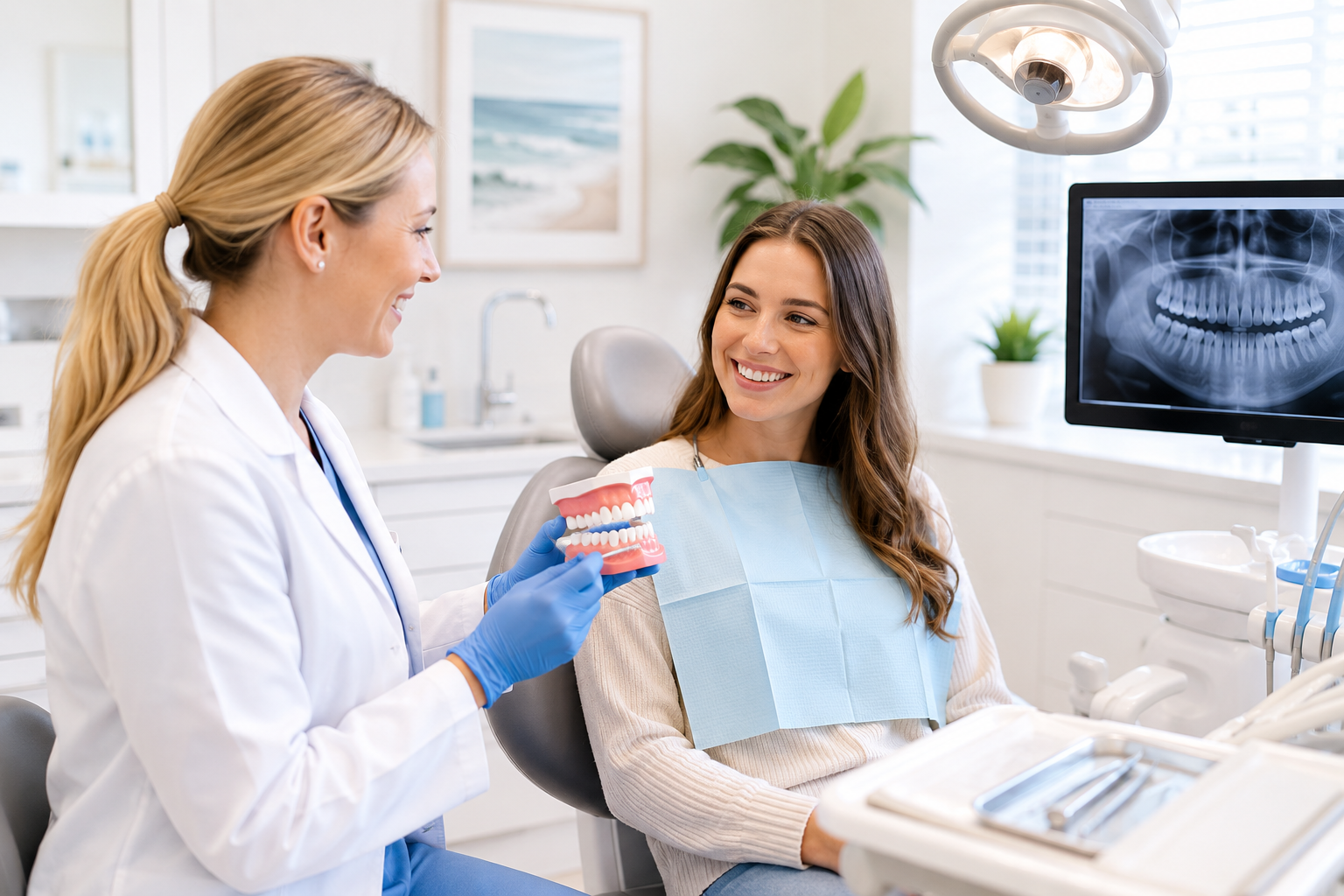
Tooth color naturally varies from person to person. Teeth can also become darker or more yellow over time, even when someone brushes and flosses consistently. Discoloration generally falls into two broad categories.
Surface stains
Surface, or extrinsic, stains collect on the outside of the enamel. Common contributors include coffee, tea, red wine, dark soda, tobacco, and strongly pigmented foods. Plaque and tartar buildup may also make the smile appear dull.
A professional cleaning can remove plaque, tartar, and some surface staining. Cleaning is not the same as bleaching, however. If the natural tooth color still looks darker than the patient would like after a cleaning, whitening may be considered.
Discoloration within the tooth
Intrinsic discoloration develops inside the tooth. It may relate to natural aging, dental trauma, certain medications taken while teeth were developing, or changes in the internal tooth structure. These stains can be more difficult to lighten, and results may vary considerably.
A dentist can evaluate the type of discoloration and explain whether whitening is likely to help. In some situations, another cosmetic option may be more appropriate.
How Teeth Whitening Works
Most conventional whitening products use hydrogen peroxide or carbamide peroxide. These ingredients break down stain-causing compounds in the tooth, making the teeth appear lighter. The concentration, application method, and amount of time the material remains against the teeth differ by product.
Whitening should not be confused with physically scrubbing away enamel. When an appropriate product is used as directed, its purpose is to change the appearance of stain molecules rather than grind down the tooth surface.
Professional supervision can make the process more predictable. A dental team can assess the teeth and gums, recommend an appropriate approach, and help reduce unnecessary contact between whitening gel and sensitive gum tissue.
Professional Whitening and Store-Bought Products
There is no single whitening method that is ideal for every patient. The right choice depends on the type of staining, desired result, dental health, sensitivity history, schedule, and budget.
Dentist-supervised whitening
Professional options may include treatment performed in a dental office, a dentist-provided take-home system, or a combination of approaches. Availability varies by practice, so patients should ask which methods are currently offered.
Dentist-supervised whitening offers several practical advantages. The dental team can examine the mouth first, select an appropriate product strength, provide application instructions, and monitor sensitivity. Custom-made trays, when offered, are designed to fit more closely than universal trays.
Over-the-counter whitening
Whitening strips, gels, rinses, and toothpastes are widely available. Some may improve mild surface discoloration when used consistently and according to their directions. Because these products are designed for general use, they may work more gradually or fit less precisely than a professionally selected system.
Whitening toothpastes primarily help remove or control surface stains. They generally do not change the underlying color as significantly as peroxide-based bleaching products. Highly abrasive products or aggressive brushing can also irritate the gums and contribute to tooth wear, so more scrubbing is not necessarily better.
Who May Be a Good Candidate for Whitening?
Whitening is commonly considered by adults with healthy teeth and gums who want to reduce yellowing or food-and-drink stains. A dental examination remains important because the visible color of a smile is only one part of oral health.
A dentist may recommend treating other concerns before whitening if a patient has:
- Untreated cavities or cracked teeth
- Gum inflammation or exposed tooth roots
- Significant or unexplained tooth sensitivity
- One tooth that has suddenly become darker
- White, brown, or gray areas that may respond unevenly
- Crowns, veneers, bonding, fillings, or dentures in visible areas
Whitening materials lighten natural tooth structure, but they do not reliably change the color of existing crowns, veneers, fillings, or bonding. If these restorations are visible when smiling, the dentist can discuss how whitening may affect overall color matching. This is especially useful before replacing or placing a new front-tooth restoration.
What to Expect From the Whitening Process
The process typically begins with a conversation about the patient’s goals. Some people want a noticeable change before a special event, while others prefer gradual brightening. The dentist may examine the teeth, review existing dental work, and compare the starting shade.
If whitening is appropriate, instructions will depend on the selected method. Patients using a take-home product should follow the recommended amount and schedule rather than adding extra gel or wearing it longer. More product does not guarantee a better result and may increase irritation.
Results are not identical for everyone. Yellow-toned discoloration may respond differently from gray or medication-related staining. The final shade also depends on the tooth’s natural structure and the cause of discoloration. Ethical whitening guidance should set realistic expectations rather than promise a specific number of shades.
Is Teeth Whitening Safe for Sensitive Teeth?
Temporary tooth sensitivity and gum irritation are among the most commonly discussed effects of peroxide-based whitening. Sensitivity may feel like a brief response to cold air, drinks, or food. The likelihood and intensity can vary based on the product, concentration, application time, and the patient’s starting dental condition.
Patients with a history of sensitivity should mention it before treatment. A dentist may suggest adjusting the whitening schedule, using less material, selecting a different concentration, or pausing treatment if discomfort develops. Desensitizing toothpaste may also be discussed as part of a personalized plan.
Whitening should be stopped and a dentist contacted if a patient develops severe pain, prolonged sensitivity, pronounced gum irritation, or symptoms affecting a particular tooth. Persistent discomfort may indicate an issue unrelated to whitening that requires evaluation.
How to Help a Whiter Smile Last
Whitening is not a permanent shield against future staining. Teeth remain exposed to foods, drinks, and habits that can gradually change their appearance. Maintenance needs vary, and touch-ups should follow a dentist’s or product manufacturer’s instructions.
Simple habits that may help preserve the result include:
- Brushing twice daily with a fluoride toothpaste
- Cleaning between the teeth each day
- Keeping routine dental cleaning and examination appointments
- Rinsing with water after coffee, tea, red wine, or other dark beverages
- Avoiding tobacco products
- Using a straw for appropriate cold drinks to reduce contact with front teeth
- Following professional guidance for occasional touch-ups
Patients do not need to avoid every colorful food forever. Consistent oral hygiene and sensible moderation are generally more realistic than an overly restrictive “white diet.”
How Much Does Teeth Whitening Cost in Madison, IN?
The cost of whitening depends on the method used, the number of visits or applications needed, whether custom trays are involved, and whether dental concerns must be treated first. Because cosmetic whitening is often not covered by dental insurance, patients may want to request a clear estimate before proceeding.
A lower price does not always mean better value, particularly if a product does not suit the patient’s type of staining or causes avoidable sensitivity. A consultation can help patients compare convenience, expected improvement, supervision, and maintenance needs—not simply the initial price.
Frequently Asked Questions About Teeth Whitening
Will whitening damage tooth enamel?
Whitening products should be selected carefully and used exactly as directed. Peroxide-based treatments can cause temporary sensitivity or gum irritation, particularly when overused. A dental evaluation is the safest way to determine whether the teeth and gums are healthy enough for whitening and which method is appropriate.
Can whitening remove every stain?
No. Results depend on the cause and depth of discoloration. Surface stains and some age-related yellowing may respond well, while gray discoloration, developmental changes, or medication-related stains can be more resistant. A dentist can explain the likely response after examining the teeth.
Can crowns, fillings, or veneers be whitened?
Whitening does not predictably lighten restorative materials. Existing dental work may appear darker than the surrounding natural teeth after treatment. Patients with visible restorations should discuss shade matching before beginning.
Should teeth be cleaned before whitening?
A cleaning may be helpful when plaque, tartar, or surface staining is present. It also gives the dental team an opportunity to evaluate gum health and look for issues that could make whitening uncomfortable. The recommended order will depend on the individual patient’s needs.
How long do whitening results last?
There is no universal timeline. Diet, tobacco exposure, oral hygiene, starting tooth color, and the whitening method can all affect how long the smile stays bright. Periodic touch-ups may be appropriate, but they should not be performed more often than recommended.
Is professional whitening worth it?
For many patients, professional guidance provides value through a dental examination, individualized product selection, closer fit, sensitivity management, and realistic expectations. The best option depends on the patient’s goals, oral health, and budget.
Explore Teeth Whitening in Madison, Indiana
A brighter smile should never come at the expense of comfort or oral health. The first step is finding out what caused the discoloration and whether the teeth and gums are ready for whitening.
Madison Dental Health Partners helps patients in Madison, IN explore options for improving their smiles. Patients interested in whitening can contact the practice to ask about available services, expected results, sensitivity concerns, and costs. A personalized conversation can make it easier to choose a safe, practical next step with confidence.